He Recorded a Rock Album in 2004. It Came Out in 2022.
J.C. Ruffier cut a rock album, then spent 12 years as a fugitive from the FBI. Releasing it was not an option.
The only album on the Apple Music page for an artist called Ruffier is titled International Delinquent. It runs 12 songs and 49 minutes, and it is dated Feb. 4, 2022. The copyright line names the singer, not a label.
The music is much older than that date. It was recorded at Estudio Galápagos in Buenos Aires in 2004 and 2005. Nearly 18 years passed before it came out.
The reason for the wait isn’t musical. It’s legal.
J.C. Ruffier, born Juan Carlos Ruffier, is an Argentine-American pilot who came to music by way of radio. On air he went by Air Juan, with ties to the El Paso rock station KLAQ. Ruffier says that connection led him in 1995 to Robby Takac of the Goo Goo Dolls and Doug Johnson of Loverboy, and that those brief meetings inspired him to start recording. He kept flying.
The Buenos Aires sessions had a real band. The lineup included Gabriel Lis, who played guitar in the Argentine metal band Horcas from 1999 until about 2011, along with Omar Piñeyro on keyboards and arrangements, Herman Wintter on bass and Ricardo Alonso, known as El Griego, on drums. Néstor Tinaro recorded, mixed and mastered it. Ruffier sang lead, co-produced and wrote the lyrics, sharing a writing credit on “Solitaire” with Lawrence Rivera.
The sound comes straight from the early 1980s. Ruffier names AC/DC, Judas Priest and Billy Idol as influences, and a few songs lean toward Deep Purple. “I have my own style, but I am influenced by the ’80s, and there’s no ifs, ands or doubts about that,” he said. He is quick to credit the band. “Of all the musicians, I was the one lacking,” he said. “They’re professionals.”
The record opens with “Free,” a song written for a stage he never got to play. The idea was to lift whatever weight an audience carried in, for one hour. “In your mind, stop time, we’ll spend eternity,” the lyric goes. “Here we’re free, you and me.”
Those sessions ran alongside a custody fight. In May 2004 he filed suit in El Paso to end his marriage and settle custody of his son, born in Buenos Aires in 2002. In 2005 a Texas judge gave custody to the mother, Komposite News reported. Court records say he picked the boy up for a visit that April and did not return him. Komposite says he went back to Argentina with the child on May 13.
Some of that fight is in the songs. Ruffier says he wrote “Said and Done,” a rock ballad built on a small melody by Piñeyro, before the case was even filed, while the boy’s mother kept taking the child from him and, he says, demanding money and telling him he would never see his son again. “It’s Too Late” sounds like a deal with the devil, “Signed in blood, it couldn’t be undone.” Ruffier says it is really about his marriage. He wrote it in five minutes in Belarus, he said, after being told his music would never go anywhere.
On Dec. 12, 2005, he was detained in Paraguay, and his son was taken from him. They would not be reunited until October 2014. Eight years and ten months.
Some rulings then went his way. On April 13, 2006, a Texas appeals court found the trial court never had jurisdiction over the boy and reversed its custody orders. In December 2008 a federal court in Formosa, Argentina, dismissed the abduction case against him for good, according to his appeal.
The American case stayed open. A federal indictment was filed in El Paso in 2006. In 2007 he shot a music video for “Candyman” in Argentina with Diego Fiori, but the video stayed unreleased, just like the album. For a rock singer, an open indictment is a practical problem as much as a legal one. “We could have toured,” Ruffier said. His musicians made their living from music in Argentina, where that is hard to do, and an American run would have been a break for all of them. “Americans want music in English, let’s face it,” he said. “Rock in Spanish is very limited to Latin America and Spain.” Instead, he said, “due to my legal situation, I wasn’t able to do anything with it.”
The boy was 12 when he landed in Argentina from Moscow in October 2014, the newspaper Clarín reported. Ruffier had learned Russian doing business in Russia, and later lived with the child’s mother in Belarus. He told the paper that his son stepped off the plane and said the one word that is the same in both languages, Papá. It had been nine years of struggle, he said, and now he could rest.
The other side of that story is on the record too. The AP reported in 2017 that the mother had custody rights when the boy was taken in 2005. Ruffier said he worried she was mistreating the child, and she denied harming him.
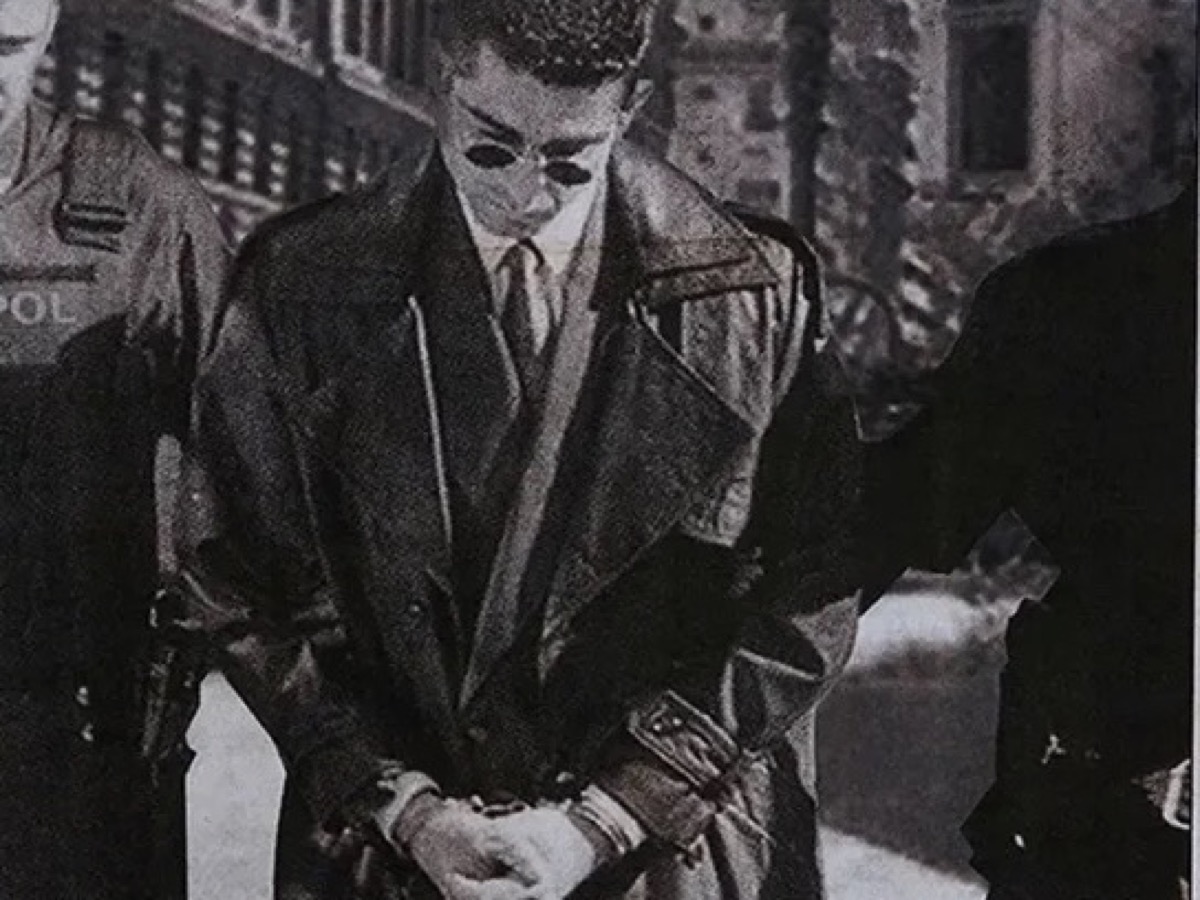
In March 2017, FBI agents took him into custody at an El Paso border station on federal kidnapping and other charges, the Associated Press reported. Ruffier says it was a voluntary surrender. He had told authorities he was coming to turn himself in at an international bridge, and they were expecting him.
The case ended in 2018 with an arranged plea agreement. Ruffier says he accepted the deal knowing it meant he would be released right away, with a sentence of 12 months and a day, about ten of which he had already served. Komposite said it has not seen the plea agreement or the judgment.
The album surfaced after that. He started a memoir in June 2020. By early 2022 he was flying for a FedEx feeder out of Roswell, New Mexico, and reviewing the English edition of the book, which tells the story behind the songs. People he met kept asking about his music, and he was tired of handing out CDs. So he uploaded the album himself, with no label, no playlist push and a couple of Facebook posts. “I started getting a little following,” he said. “That tripped me out.” Before the release, he and Piñeyro added orchestral and instrumental versions of “Said and Done,” the song listeners kept praising.
Heard now, the rest of the track list is hard to take cold, though Ruffier explains most of it plainly. “Nothing to Hide” is a true story about being pulled over and searched on the way to his brother’s house. “A lot of people think that because of my legal issues I hate the police,” he said. “I know cops who are amazing people. But I’ve also come across officers who abuse that power.” “Run Away” argues for the clean break, with new friends, a new place and a fresh start. “Don’t Look Down” argues that you can’t run from your life. It is about persistence, about “nowhere to hide from the demons in your mind,” until the years “turn you into someone bolder.”
“Solitaire” is the odd one out, a soft acoustic ballad. Rivera brought a melody and a few lines to Ruffier’s house after a motorcycle accident had broken his clavicle. Ruffier was heavily medicated and propped up at 45 degrees, unable to lie down or sit up, and they finished it in a few hours. “Like a game of solitaire, I’m the only one there,” it goes. “It fit perfectly with my life at that time,” he said. There is lighter fare too. “All My Needs” is a rock-star fantasy about a singer moving from town to town and woman to woman, written in character, he says, though he admits he was “a bad boy” in his 20s and 30s. “Burning for Your Love,” built on another Piñeyro melody, is about wanting someone back badly enough to play head games. Ruffier says it is not one of his favorites.
The packaging tells its own story. Ruffier is on the front. The back is a New York courthouse, with the track list printed across its columns. He made the artwork after he was already wanted by the FBI. The title goes back to a trip he made to Bolivia, which ended, somehow, on the Bolivian Air Force base at El Alto in La Paz. When he returned to Asunción, Paraguay, a friend told him, “In Bolivia, in Argentina, anywhere you go, you’re an international delinquent.”
That memoir, published under the same title, International Delinquent, tells both of those stories and the one behind “Candyman.” It is now available in six languages. The cover calls him a “falsely declared” international delinquent. His website offers the case papers so readers can check him against the record.
That fight is not finished. In 2016 he sued Argentina and the United States for damages in Buenos Aires. His claims about U.S. officials have not been tested in court. An appeals court upheld U.S. immunity on June 30, and as of late October his bid to reach Argentina’s Supreme Court was still pending.
The album closes with two extra versions of “Said and Done,” one orchestral and one instrumental. The song is also the theme of the International Delinquent audiobook. So the last thing a listener hears is that song with the singer gone. For Ruffier, neither word applies yet.